Six Factors. One Clear Picture of What Matters.
CARVER breaks any complex decision into six measurable factors — replacing instinct and static frameworks with a repeatable system for ranking what actually deserves your attention.
Car·ver·ol·o·gy
noun
The discipline of rigorous, deliberate critical thinking applied to complex problems in security, business, and leadership, especially as a counter to cognitive offloading onto technology, derived from the CIA's CARVER Methodology.
“Before deciding where to invest the security budget, the team applied a little CARVERology to identify the highest priorities, instead of simply asking a chatbot.”
Not Ready for a Live Course? Start Here.
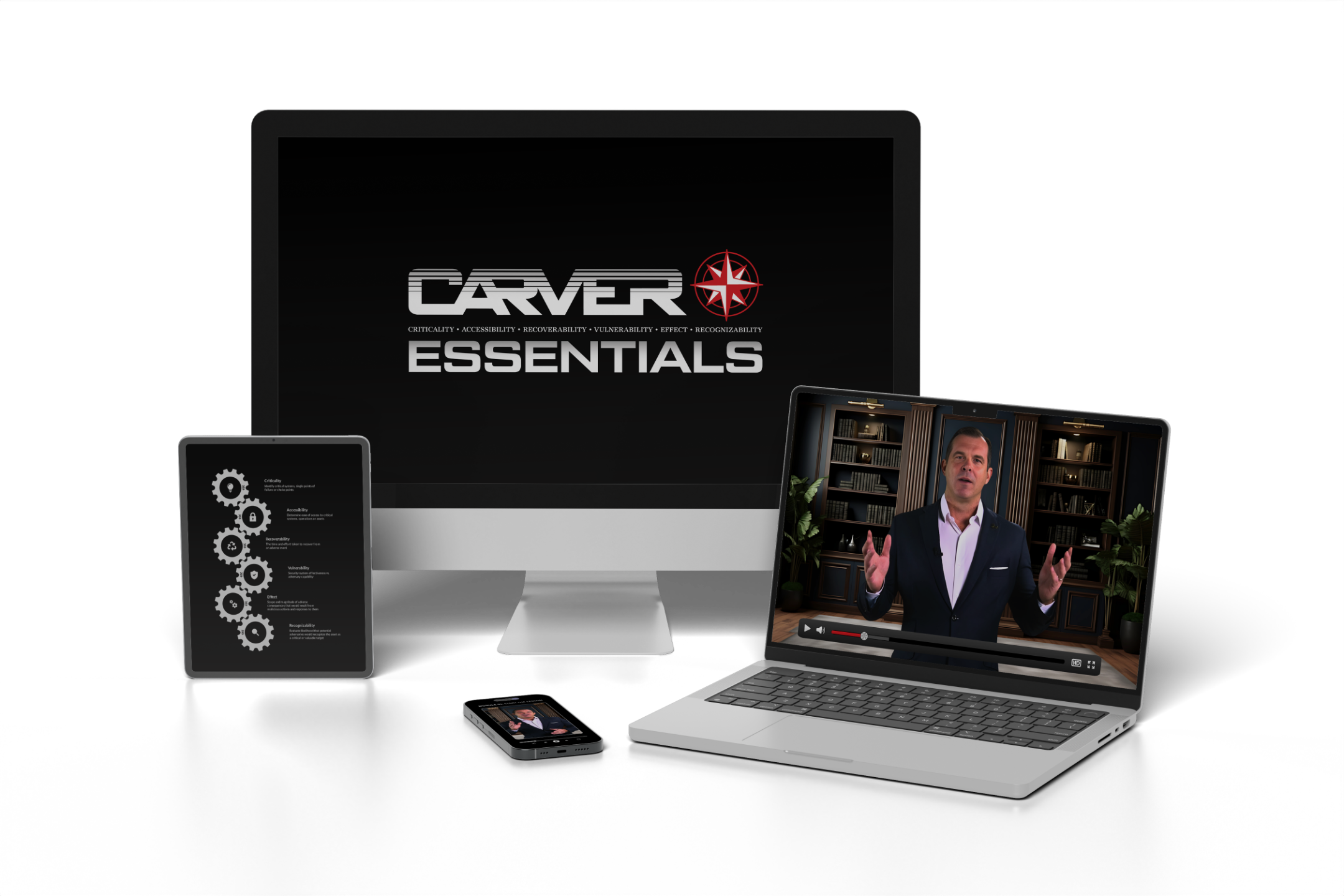
CARVER Essentials introduces the core methodology in a concise, self-paced video series. Your $97 enrollment is credited in full when you register for any live CARVER course.
The $97 CARVER Essentials credit may be applied once toward registration for any live CARVER Training Institute course within 12 months of purchase. Credit is non-transferable, has no cash value, and cannot be combined with other discounts.

The CARVER Methodology is one of the most effective tools that a security professional can use.”
- General James L. Jones, Former U.S. National Security Advisor

Built for Target Analysis. Adapted for Every High-stakes Decision.
CARVER originated as a targeting and vulnerability framework used in U.S. special operations and force protection planning — a way to rank targets and assets by what would matter most if acted upon. The same six factors, applied in reverse, are just as effective at ranking what an organization needs to protect, invest in, or fix first.
Learn More About CARVER Methodology
What CARVER Actually Measures
Each factor is scored independently, then combined into a single ranked priority — no factor decides the outcome alone.
Criticality
How essential is this target or asset to the mission, system, or business as a whole? The more central it is, the higher it scores.
Example
A single regional data center that hosts 80% of transaction processing scores far higher than a satellite office with local backups.
Accessibility
How easily can this target actually be reached or acted upon — physically, digitally, or organizationally?
Example
An unguarded loading dock scores higher on accessibility than a server room behind three layers of badge access.
Recoverability
How quickly could the system recover if this were disrupted, damaged, or lost?
Example
A vendor relationship with a 6-month replacement lead time scores higher risk than one with same-week alternatives.
Vulnerability
What weaknesses actually exist that could be exploited, and how exposed are they right now?
Example
A legacy system past its patch-support window scores higher than a recently hardened, actively monitored one.

Effect
What's the scale and reach of the impact if this factor is actually acted on or fails?
Example
A disruption that cascades into three dependent business units scores higher than one that's fully contained.
Recognizability
How identifiable is this target under the actual conditions someone would be operating in?
Example
A clearly labeled control room is more recognizable — and more exposed — than an unmarked utility closet.

SWOT was the past; CARVER is the future™
Enhance Your Strategic Decision Making

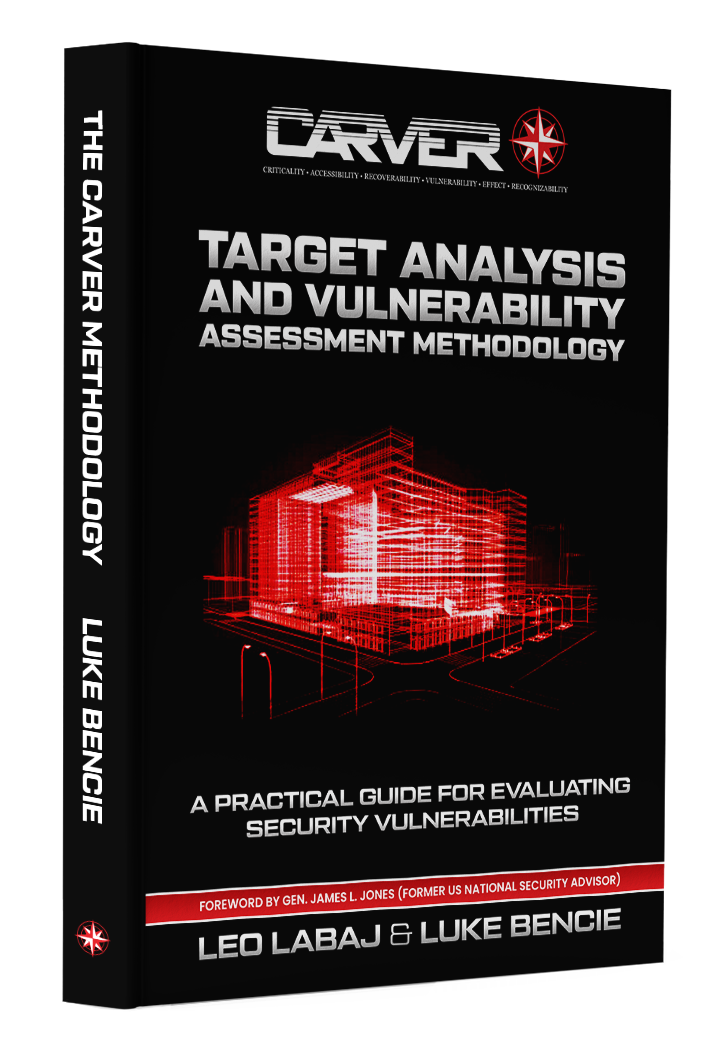
Get Your Free Chapter of the CARVER Methodology TODAY!
The Methodology, Explained in Detail.
Ready to Apply It? Learn to run this assessment yourself.
Helpful links
Certification Courses
Carver 3 Day LIVE
Carver Strategy
Carver Keynote Speaking
Carver Leaderhip
Carver Mindset
Carver Fundamentals
Resources
Chalk Talk
News
Blog
The CARVER Training Institute is accredited by these fine organizations.